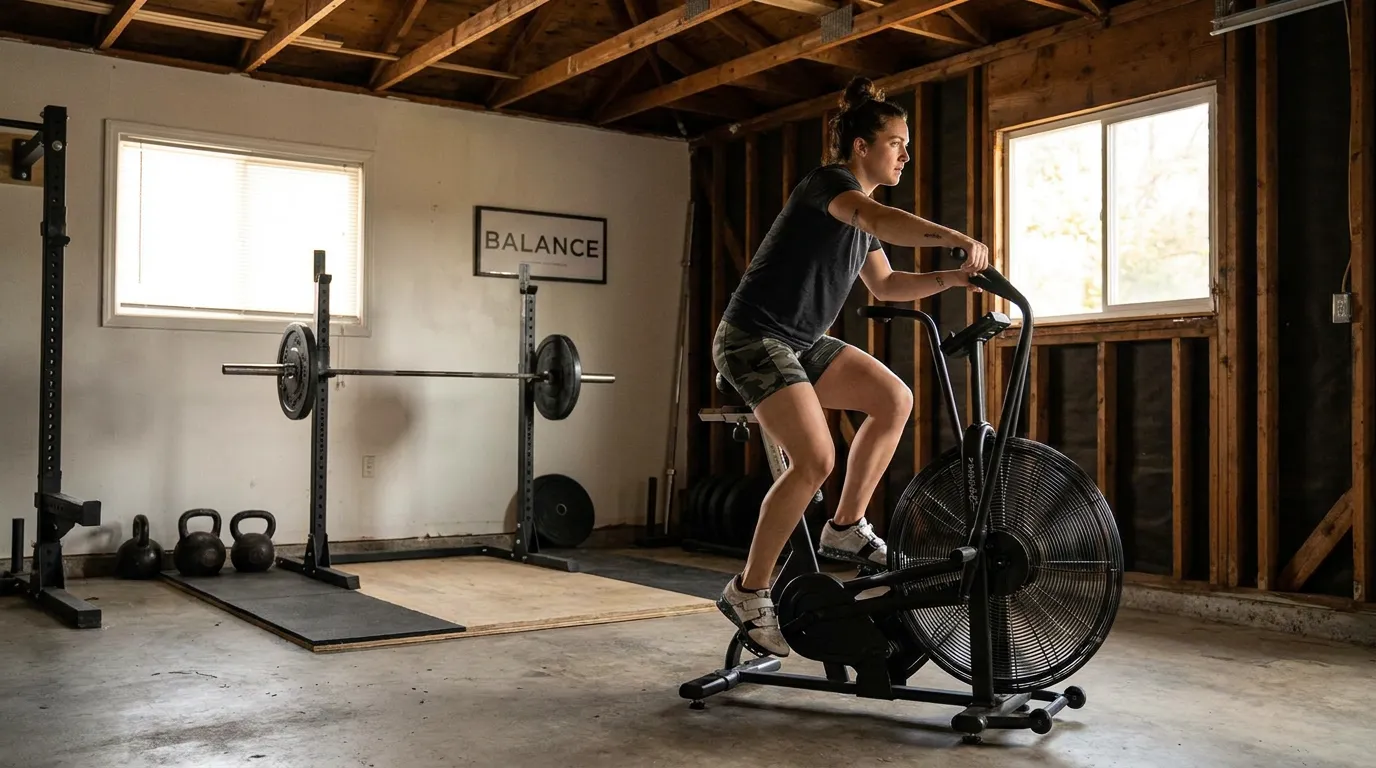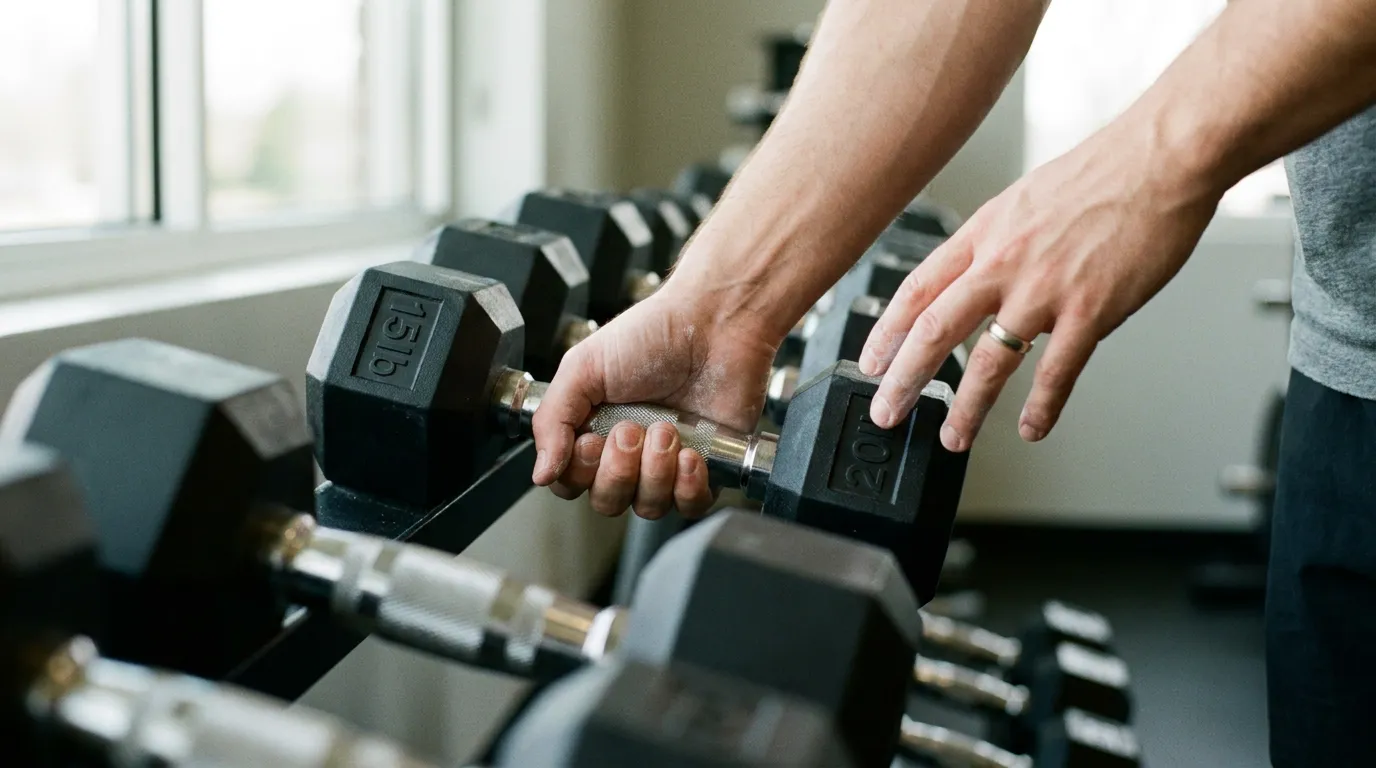
Walk past the glass walls of almost any commercial fitness facility, and you will typically observe the same high-energy scene: iron clanging, loud music echoing, and trainees closely monitoring whiteboards or screens. It is easy to mistake that physical theater for the actual work of getting strong.
Genuine strength training is not about the commercial setting. It is not about how much weight you can stack on a bar, nor is it about exercising to the point of complete exhaustion.
At its physiological core, strength training is a continuous conversation between your central nervous system (CNS) and external resistance. It is the process of teaching your motor units to fire in synchronized patterns, distribute physical load across stable joints, and recover efficiently. When stripped of commercial noise, strength training for beginners is one of the most accessible, health-promoting, and evidence-backed lifestyle habits available to humans [1].
Yet, novice trainees quit at exceptionally high rates. This rarely occurs because the physical work is too difficult. Instead, it occurs because the initial entry point feels overwhelming, filled with conflicting advice, complex terminology, and a natural fear of joint injury.
This foundational guide removes the theater. You will learn the three physiological laws of beginner strength, the four primary movement patterns that form the blueprint of human capability, and how to structure your initial weeks of training so your progress compounds safely without causing physical burnout.
The Three Laws of Beginner Strength
Many beginners approach weight lifting as a simple transaction: I lift a heavy object, therefore I get strong.
Physiology does not operate in such a linear fashion. In the initial four to six weeks of a beginner strength program, your body undergoes rapid neurological adaptations rather than structural muscle growth [4]. Your brain is learning to recruit existing motor units more efficiently and coordinate muscle groups in a process known as intermuscular coordination.
Because strength is a physical skill, it must be developed through the application of three core laws:
Law 1: Movement Quality Dictates Load Capacity
Your joints and ligaments rarely fail simply because an object was too heavy. They typically fail because the force generated during the lift traveled through compromised or inefficient physical pathways.
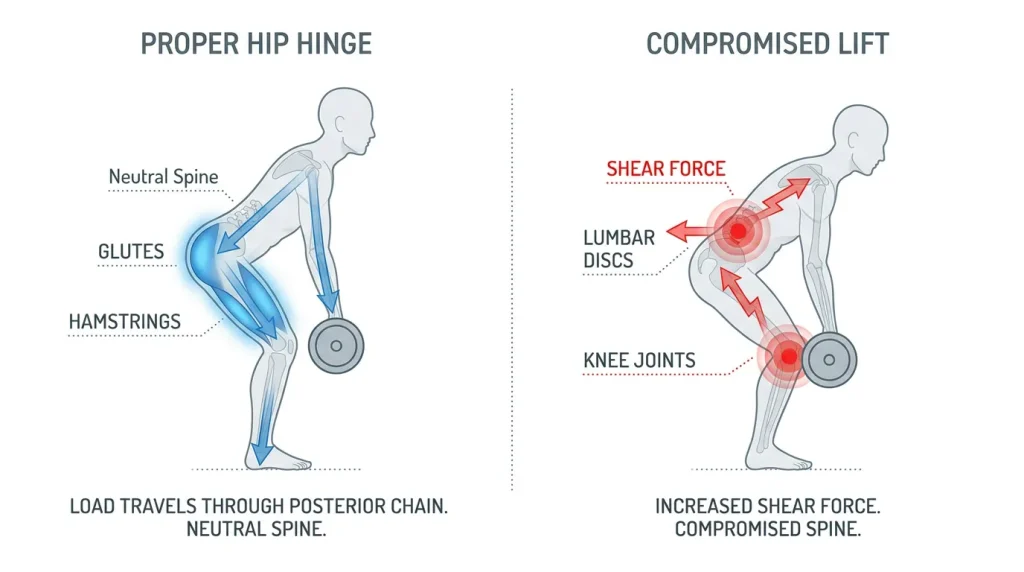
When your hips fail to hinge properly during a lift, your lumbar spine is forced to absorb the resulting shear stress [3]. When your shoulders collapse forward during a press, your rotator cuff tendons bear the brunt of the load.
“The spine doesn’t care how much you lift. It cares how you lift it. Tissue tolerance is built through repetition of safe movement, not heroic attempts under poor mechanics.” — Dr. Stuart McGill, Professor Emeritus of Spine Biomechanics, University of Waterloo [3]
This does not require achieving visual perfection on day one. It requires establishing a safe movement path where physical tension travels through your active muscles and bone structures as intended, protecting your passive ligaments, joints, and skeletal system.
Law 2: Tension Builds Strength; Exhaustion Builds Fatigue
The commercial fitness industry frequently conflates severe post-workout soreness (Delayed Onset Muscle Soreness, or DOMS) with physical progress. This is a physiological error.
Strength adaptations occur when your muscle fibers experience sufficient mechanical tension, recover fully, and undergo a process called supercompensation [1]. Grinding your body to complete failure during every session floods your neuromuscular system with metabolic waste, spikes systemic stress hormones (cortisol), and significantly prolongs your recovery time without adding any meaningful strength stimulus.
“Strength training should feel like practice, not punishment. If you’re dragging yourself through sessions, you’re training fatigue, not capability.” — Dan John, Strength Coach and Author of Intervention [5]
To build lasting strength, leave one to two repetitions “in reserve” at the end of each set. Focus on moving the weight with complete control, respecting your nervous system’s capacity to adapt.
Law 3: Progression Requires Feedback, Not Guesswork
To make consistent progress, you must treat your workouts as structured experiments rather than random acts of exertion.
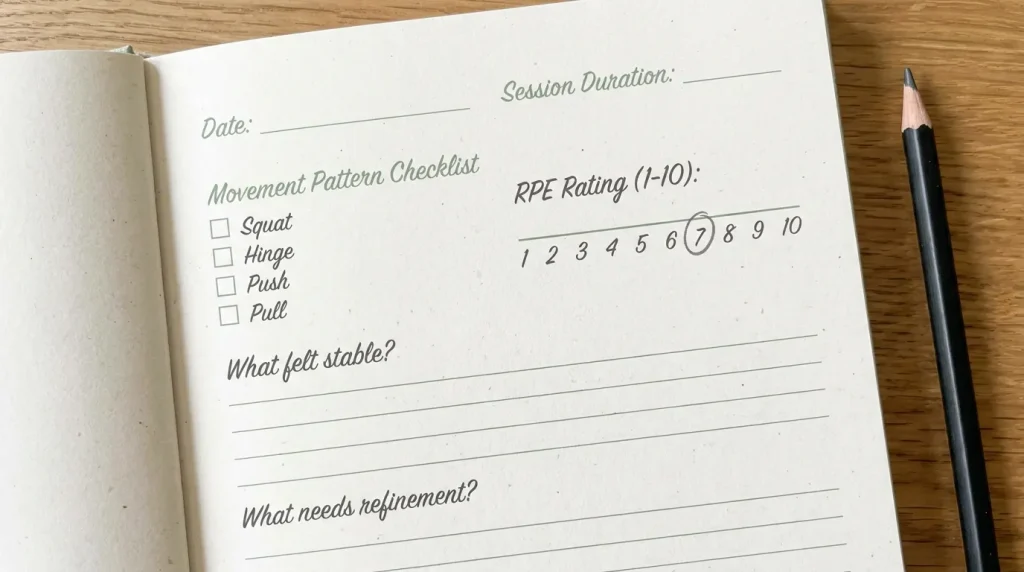
Most beginners guess. They either stall out of extreme caution, or they push ahead too quickly and slide into overuse injuries. The alternative is treating every finished set as valuable data.
Using a simple post-workout check-in—rating your physical effort on a scale of Too Easy / Just Right / Too Hard—creates a highly responsive feedback loop. When this subjective rating directly informs your next session’s repetitions, holding times, or loads, your progress stops being a guessing game and becomes a reliable, sustainable system.
The Big Four: Movement Patterns, Not Muscle Groups
Novices often divide their training into isolated muscle groups like “chest day” or “leg day.” Experienced coaches, however, design programs around movement patterns [4].
Your muscles do not function in isolation; they operate in highly integrated kinetic chains. Training patterns rather than individual muscles builds functional, real-world coordination, improves core stability, and reduces the risk of injury.
Master these four movement patterns to establish a complete strength foundation:
The Pathway of Functional Force
- 🏋️ The Squat (Knee-Dominant Lower Body): Focuses on knee flexion and quadriceps engagement.
- 🍑 The Hinge (Hip-Dominant Posterior Chain): Emphasizes hip extension and glute/hamstring load.
- 💪 The Push (Upper Body Pressing): Targets pressing mechanics across the chest and arms.
- 🚣 The Pull (Upper Body Pulling): Targets posterior pulling muscles and postural width.
1. The Squat Pattern (Knee-Dominant Lower Body)
- What it trains: Quadriceps, glutes, core stabilizers, and ankle mobility.
- Why it matters: Sitting down, standing up, climbing steps, and lifting objects. It is the most fundamental lower-body displacement pattern.
- Beginner Entry: The Box Squat (tapping your hips down onto a sturdy chair before standing). Focus on keeping your heels glued to the floor and maintaining a tall, neutral spine.
2. The Hinge Pattern (Hip-Dominant Posterior Chain)
- What it trains: Hamstrings, glutes, lower back, and spinal erectors.
- Why it matters: Bending over to pick up groceries, lifting children, and athletic power generation. The hinge teaches your hips to carry load, protecting your lower back [3].
- Beginner Entry: The Romanian Deadlift (holding a light dumbbell in each hand and sliding them down your thighs as you push your hips straight back).
3. The Push Pattern (Upper Body Pressing)
- What it trains: Chest, anterior shoulders, triceps, and trunk stability.
- Why it matters: Pushing open heavy doors, getting up off the floor, and daily upper-body utility.
- Beginner Entry: The Incline Push-Up (placing your hands on a sturdy counter, couch, or wall). Keep your elbows tucked at a 45-degree angle rather than flaring them outward.
4. The Pull Pattern (Upper Body Pulling)
- What it trains: Upper back (lats, rhomboids), rear shoulders, biceps, and grip strength.
- Why it matters: Pulling objects toward you, carrying heavy bags, and counteracting the forward-rounded posture common to desk workers.
- Beginner Entry: The Doorframe Row or a standing resistance band row. Focus on squeezing your shoulder blades together without shrugging your shoulders toward your ears.
Your First Strength Session: A Field Guide
The 20-minute, full-body routine detailed below is an independent, highly effective manual layout you can follow if you choose to train on your own.
App Integration Tip: If you are a FitSekai user, there is no need to manually coordinate exercises, track times, or write down rep schemes. We recommend launching Module #56: Total Body 101, under the program Total Body 101: Fullbody Weekly Beginner, specifically Total Body 101: Fullbody Beginner.
Launching this session in the app automates your active timers and transitions, allowing you to focus entirely on your physical technique.
Alternative Workout Structure: 2-Round Circuit
Perform each movement for 40 seconds, followed by 20 seconds of rest. Once you complete one full round of all five movements, rest for 60 seconds, and then repeat the circuit for a second round.
- Warm-Up (3 Minutes): Spend 1 minute on cat-cow stretches and 2 minutes on slow bodyweight sit-to-stands to prepare your joints [5].
- Station 1 (Squat Pattern): Goblet Squat to Chair (hold a light dumbbell at your chest, tap a chair, and stand).
- Station 2 (Push Pattern): Incline Couch Push-Up (hands on couch or chair; lower for 3 seconds, push back up).
- Station 3 (Pull Pattern): Doorframe Row (grip doorway frame; lean back, pull chest forward smoothly).
- Station 4 (Hinge Pattern): Dumbbell Romanian Deadlift (push hips back, keep back flat, slide weights to knee level).
- Station 5 (Trunk/Core Pattern): Standing Single-Dumbbell Halo (circle a light weight slowly around your head, bracing core).
- Cooldown (1 Minute): Spend 1 minute performing seated diaphragmatic breathing and gentle posture resetting.
App Integration: Perfecting Your Routine with FitSekai
If you are new to how to start lifting weights, managing active timers, counting repetitions, and tracking progression can quickly feel like a distraction.
Smarter Personalization with FitSekai
- Smart Adaptive Progression: At the end of your Beginner Strength Session, FitSekai prompts you to rate the workout’s difficulty. If you rate the goblet squats or push-ups as “Too Easy,” the app’s adaptive engine automatically scales up your target reps, hold times, or tempos for your next session—ensuring you apply progressive overload without risking overtraining.
- Intuitive Routine Maker: If you prefer to customize your beginner strength program, the app features a flexible Routine Maker. You can mix, match, and arrange over 1,800 different exercises to design a balanced routine that matches your specific home environment and equipment access.
- Hands-Free Audio Cues: Because executing compound movements requires proper head and spine alignment, staring at a phone screen can disrupt your form. FitSekai’s built-in Text-to-Speech (TTS) engine announces your exercise transitions and timers directly on your play screen, with manually activated read-out options for exercise descriptions when you need a technical form check.
- Absolute Privacy & Ad-Free UX: FitSekai is completely ad-free, keeping you focused on your training. With a strict Absolute Privacy policy, all your body weights and personal logs remain stored locally on your device with zero data sharing.
Access the complete Total Body 101 module and start training smarter with FitSekai premium:
- Monthly Subscription: $2.99
- Annual Subscription: $24.99 (Best Value)
- Each option includes a completely risk-free trial.
Navigating the Noise: Common Myths That Stall Beginners
The commercial fitness landscape is highly saturated with misinformation. Let’s clear three common myths that frequently sabotage beginner consistency:
Myth 1: “Lifting heavy weights will make you look bulky.”
Building significant muscle mass (hypertrophy) requires a massive surplus of dietary calories, high-volume training, and months of consistent physical effort [1].
Beginners experience rapid neural efficiency first, meaning you get stronger by teaching your brain to communicate better with your muscles, not by rapidly expanding their physical size. Strength training builds dense, functional muscle tissue, improves daily posture, and increases bone density—it does not create accidental, unwanted bulk.
Myth 2: “Cardiovascular exercise is the only way to burn fat.”
While cardiovascular training burns calories during the actual session, resistance training supports your metabolic rate over the long term.
As you develop lean muscle tissue, your resting energy expenditure increases naturally, helping you burn more energy even when you are at rest. Research indicates that combining strength training with moderate cardiovascular work produces highly synergistic benefits for overall body composition and cardiovascular health [2].
Myth 3: “You must use commercial gym machines to stay safe.”
Gym machines lock your body into rigid, pre-determined paths of motion. While this is useful for isolating single muscles, it completely bypasses your joint stabilizers and does not allow you to practice natural movement mechanics.
Training with free weights, resistance bands, or your own body weight teaches your stabilizers to fire and improves your proprioception (body awareness), translating directly to real-world physical activities.
Final Thought: Strength Is a Lifetime Practice
You do not “finish” strength training. You do not graduate from it.
It is a lifelong physical practice—a consistent, health-promoting dialogue with your own physical capacity. The weights do not care about your age, your past fitness failures, or your starting point; they simply respond to consistent, intelligent effort.
Show up with complete control, leave adequate room for recovery, and let honest feedback guide your next step.
📎 Read Next:
- Progressive Overload: The Key to Getting Stronger
- The First 5 Exercises Every Beginner Should Master
- Strength Training for Women: Debunking the Bulky Myth
- How Much Weight Should You Lift? (Finding Your Starting Point)
References & Further Reading
- Schoenfeld, B. J. (2023). Science and Development of Muscle Hypertrophy (2nd ed.). Human Kinetics. (The fundamental rules of mechanical tension, muscle protein synthesis, and overload) [1].
- American College of Sports Medicine. (2024). ACSM’s Guidelines for Exercise Testing and Prescription (11th ed.). Wolters Kluwer. (Authoritative clinical guidelines for cardiorespiratory and musculoskeletal health prescription) [2].
- McGill, S. M. (2024). Low Back Disorders: Evidence-Based Prevention and Rehabilitation (3rd ed.). Human Kinetics. (Biomechanical analysis of the spine, load carriage, and posture control) [3].
- National Strength and Conditioning Association. (2024). Essentials of Strength Training and Conditioning (5th ed.). Human Kinetics. (Foundational concepts of neuromuscular adaptations, programming, and movement execution) [4].
- John, D. (2021). Intervention: A Four-Part Plan to Fix America’s Health Crisis. Post Hill Press. (Philosophical and practical frameworks for sustainable, health-focused strength practice) [5].
- Wood, W., & Rünger, D. (2016). Psychology of Habit. Annual Review of Psychology, 67, 289-314. (Analyzing environmental cues and psychological triggers in fitness habits).
ID: 26011
Category: Strength Training
Content Type: Pillar Guide
Intent: Informational
Word Count: ~2,020 words
Reading Time: ~9 minutes
IMPORTANT LEGAL & CREATIVE DISCLAIMERS
Artificial Intelligence & Generation Disclosure
Please be advised that the written text, formatting structures, hierarchical organization, and creative image generation prompts contained in this guide were researched, structured, and produced with the assistance of advanced artificial intelligence technologies. While the raw narrative generation was AI-aided, all historical references, anatomical mechanisms, and scientific studies (such as the peer-reviewed clinical data from the National Strength and Conditioning Association and Human Kinetics) have been manually reviewed, cross-referenced, and verified for complete factual accuracy. All visual representations, graphic plans, and layout options are conceptual and have been generated with the assistance of artificial intelligence tools.
Health & Physical Activity Advisory
The information and educational materials provided in this guide are intended solely for general informational and learning purposes and do not constitute professional medical advice, clinical physiological diagnosis, or direct medical treatment. Engaging in any physical exercise program, particularly when utilizing modified home furniture or budget equipment, carries inherent risks of physical injury. It is strongly recommended that you consult with a qualified physician or certified healthcare professional before beginning any new training program, especially if you have pre-existing cardiovascular, metabolic, or musculoskeletal conditions. Stop exercising immediately if you experience pain, dizziness, or chest tightness.