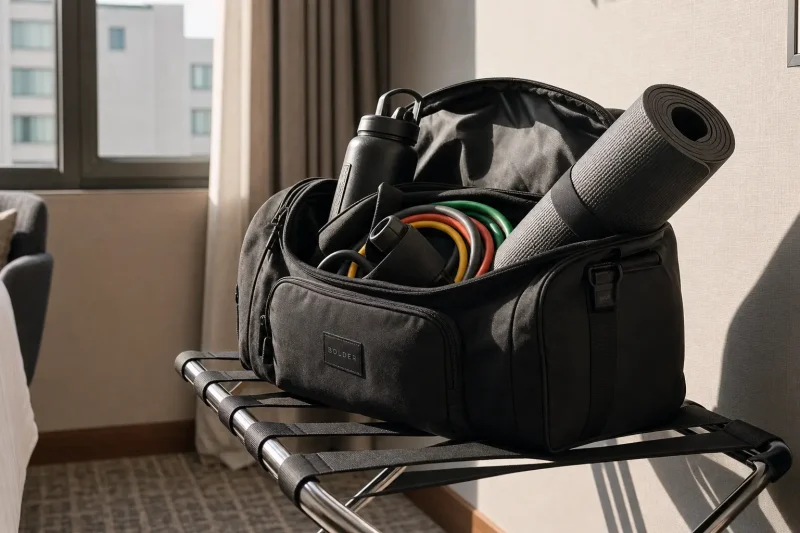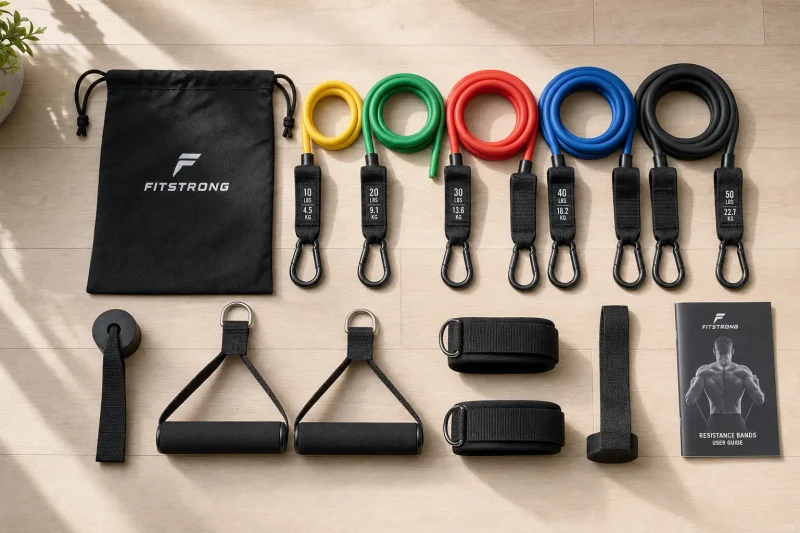
If you have ever explored minimalist home gym options, you have likely encountered the classic cast-iron kettlebell. While it resembles a simple cannonball with a handle, this single piece of equipment is recognized in exercise science as one of the most versatile, high-yield fitness tools ever created.
Many beginners purchase a kettlebell with the goal of “burning fat,” only to relegate it to the corner of their room because they find the dynamic movements intimidating. They look at advanced athletes performing complex, explosive flows and assume the barrier to entry is too high.
But here is what sports biomechanics confirms: kettlebell training is highly accessible, built on fundamental human movement patterns, and uniquely combines strength training with cardiovascular conditioning.
This guide breaks down the physics of kettlebell training, explains why the kettlebell swing is a premier movement for lower-back and glute health, and provides a gentle, step-by-step beginner routine you can perform safely at home.
The Biomechanics of the Kettlebell: Why It Is Unique
To understand why kettlebells are so effective, we must look at how they differ from traditional dumbbells.
When you hold a dumbbell, the weight is distributed evenly on both sides of your hand. The center of mass is locked directly inside your grip.
A kettlebell, however, has an eccentric center of mass—the weight of the ball lies several inches below the handle [3].
This displacement of mass changes how your body interacts with gravity:
- Dynamic Centrifugal Force: During dynamic movements like the swing, the center of mass moves away from your body, creating a centrifugal force. Your nervous system is forced to recruit deep stabilizing muscles in your core, shoulders, and obliques to control and decelerate this moving load.
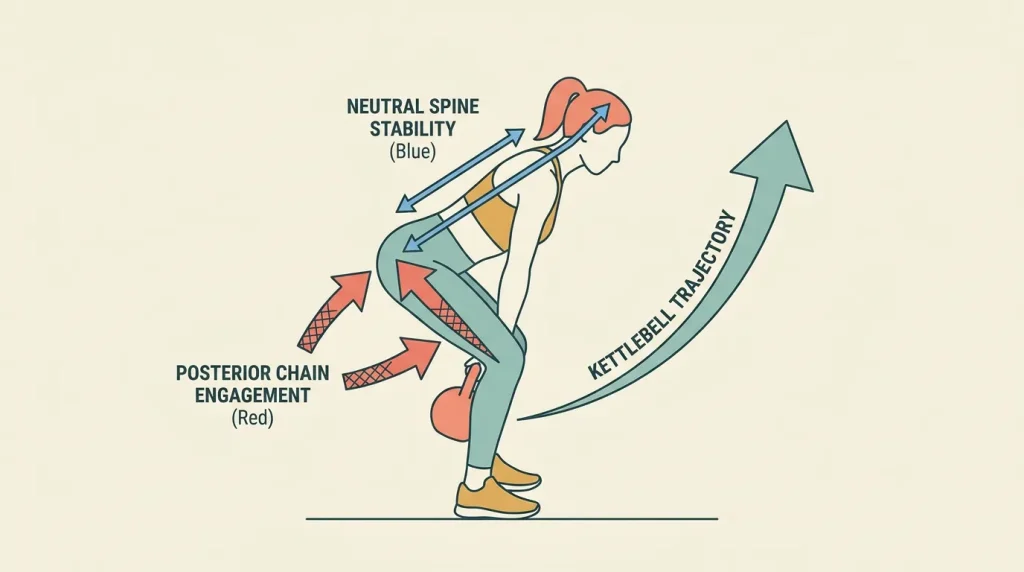
- Posterior Chain Recruitment: Because kettlebell movements are driven by a dynamic hip hinge, they heavily target your posterior chain (hamstrings, glutes, lower back, and lats). Developing these posterior muscles is critical for maintaining healthy posture, generating athletic power, and reducing the risk of lower back injury [1].
- Low-Impact Aerobic Base: Research published in the Journal of Strength and Conditioning Research (Lake & Lauder, 2012) proved that kettlebell swing training significantly improves maximal and explosive strength [5]. Because the swing is continuous and does not involve leaving the ground, it elevates your heart rate as effectively as running, but with virtually zero joint landing shock (Ground Reaction Force) [2].
The Master Movement: Mastering the Kettlebell Swing
The two-arm kettlebell swing is the foundational movement of all kettlebell training. It is often misunderstood as an “arm exercise” or a “squat.”
Physiologically, the swing is a pure hip hinge [3]. Your arms act merely as ropes holding the weight; the movement is driven entirely by the explosive snap of your hips.
The Standard Swing Progression:
- The Hike-Pass: Stand with your feet slightly wider than shoulder-width apart, with the kettlebell on the floor about a foot in front of you. Hinge at your hips, tilt the kettlebell toward you, and “hike” it back between your legs as if passing a football. This teaches you to load your hamstrings.
- The Dead-Stop Swing: Hike the kettlebell back, snap your hips forward explosively to swing the bell to chest height, and let it return between your legs under control before placing it back on the floor. Stop and reset after each repetition.
- The Continuous Swing: Once your hip timing is dialed in, link the movements together smoothly. The kettlebell should float at the top of the movement; do not pull it up with your shoulders.
The Tell (Common Flaw): “Squatting” the swing (bending your knees too much and letting the bell drop below your knees). This transfers the mechanical load from your glutes and hamstrings to your lower back and knees.
- The Fix: Focus on the cue: “Push your hips straight back as if trying to close a door behind you with your glutes, keeping your shins vertical.”
Your Beginner Kettlebell Foundation Routine
The routine detailed below is designed specifically to help you master the foundational patterns of kettlebell training safely and progressively.
Manual alternative: If you are training independently, the steps below are an excellent, self-guided template you can perform on your own using a standard stopwatch.
Workout Structure: 3-Round Circuit
Perform each of the 3 movements below consecutively for 40 seconds, followed by 20 seconds of recovery. Rest for 60 seconds after completing all three movements, and repeat the circuit for a total of 3 rounds.
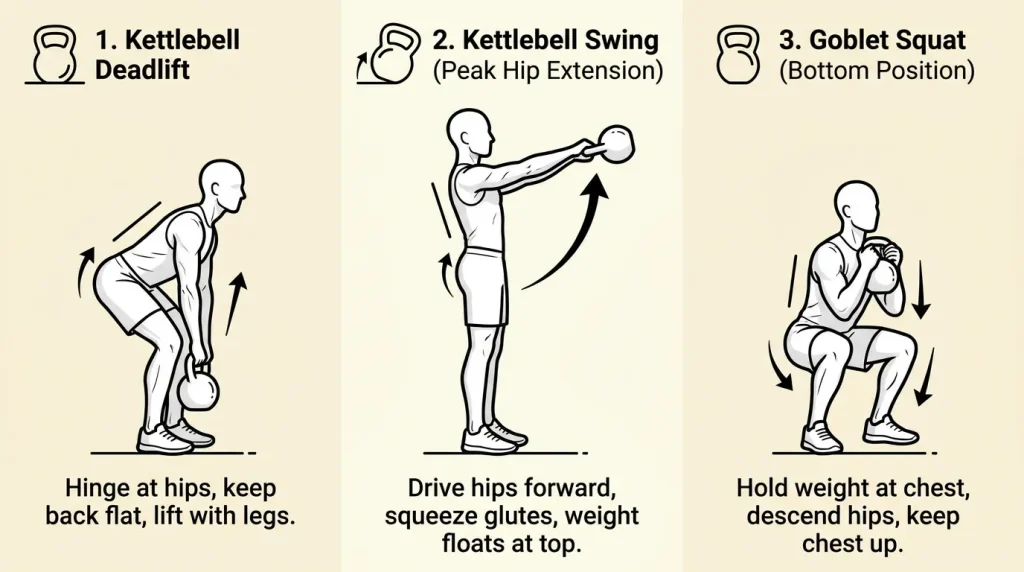
1. Kettlebell Deadlift (Hinge Pattern)
- Setup: Stand tall with your feet hip-width apart, with the kettlebell on the floor directly between your feet (aligned with your ankle bones).
- Execution: Hinge at your hips, keeping your spine flat and shoulders packed down. Grip the handle firmly, squeeze your glutes, and stand up tall. Lower the weight along the same vertical path, tapping the floor before standing.
- Why it works: Establishes the foundational hip hinge mechanics and posterior chain loading before you introduce explosive movement [3].
2. Two-Arm Kettlebell Swing (Dynamic Hinge)
- Setup: Stand a foot behind the kettlebell. Hinge forward and grip the handle with both hands.
- Execution: Hike the kettlebell back between your thighs. Snap your hips forward explosively, squeezing your glutes at the top to float the kettlebell to chest height. Let gravity pull the bell back down, hinge your hips to catch it, and repeat continuously.
- Why it works: Develops athletic power, burns high metabolic energy, and strengthens the posterior chain without joint landing impact [5].
3. Kettlebell Goblet Squat (Squat Pattern)
- Setup: Stand tall, holding the kettlebell by the vertical horns of the handle close to your chest.
- Execution: Keep your torso upright. Sit back and down into a deep squat, letting your elbows track inside your knees. Press through your mid-foot to stand.
- Why it works: The placement of the weight at your chest acts as a perfect counterbalance, allowing you to squat deeper and maintain a safer, more upright spinal position [4].
Restorative Conditioning with FitSekai
If you find yourself struggling to maintain exercise consistency, or you are unsure how to progress your training volume safely, FitSekai offers an integrated, adaptive environment.
Within the FitSekai app, you can access Module #57: Total Kettlebell Conditioning.
This comprehensive module is designed specifically to help you master the kettlebell. It features specialized programs for all fitness levels—ranging from beginner fat-loss and cardiorespiratory conditioning to advanced athletic and sport-specific power tracks.
By utilizing FitSekai’s built-in Routine Maker, you can easily mix, match, and organize these pre-programmed kettlebell routines into your own custom weekly schedule. FitSekai’s Smart Adaptive Training engine automatically processes your post-workout feedback, scaling your reps, set counts, and tempos dynamically to ensure you continue to progress safely.
Additionally, to prevent neck strain and keep your spine aligned during explosive swings and lifts, FitSekai’s Text-to-Speech (TTS) engine announces your work-to-rest transition cues directly on your play screen, with manually activated read-out options for exercise descriptions when you need a technical form check.
Final Thought: Master the Bell
An effective home fitness routine does not require a massive array of specialized equipment.
By dedicating yourself to mastering the foundational mechanics of the kettlebell deadlift, swing, and squat, you can build an athletic, resilient body, protect your lower back from desk-life stiffness, and elevate your cardiovascular fitness entirely from a single mat [1].
Clear your floor, open the FitSekai app, select your Kettlebell Conditioning routine, and let consistency do the heavy lifting.
📎 Read Next:
- The Complete Guide to Effective Home Workouts
- How to Create a Home Gym for Under $100
- Bodyweight Training: Is It Enough to Build Real Strength?
- Strength Training 101: A Complete Beginner’s Guide
References & Further Reading
- Schoenfeld, B. J. (2023). Science and Development of Muscle Hypertrophy (2nd ed.). Human Kinetics. (Evidence-based principles of mechanical tension and hypertrophic muscle adaptation) [1].
- American College of Sports Medicine. (2024). ACSM’s Guidelines for Exercise Testing and Prescription (11th ed.). Wolters Kluwer. (Standard clinical recommendations for exercise intensity, cardiovascular health, and load progression) [2].
- National Strength and Conditioning Association. (2024). Essentials of Strength Training and Conditioning (5th ed.). Human Kinetics. (Biomechanical breakdown of fundamental human movement patterns and posterior chain loading) [3].
- Garber, C. E., Blissmer, B., Deschenes, M. R., et al. (2011). Quantity and Quality of Exercise for Developing and Maintaining Cardiorespiratory, Musculoskeletal, and Neuromotor Fitness in Apparently Healthy Adults. Medicine & Science in Sports & Exercise, 43(7), 1334-1359. (ACSM Position Stand on progressive overload and resistance exercise rules) [4].
- Lake, J. P., & Lauder, M. A. (2012). Kettlebell swing training improves maximal and explosive strength. Journal of Strength and Conditioning Research, 26(8), 2228-2233. (The landmark peer-reviewed validation study of the explosive force and strength benefits of the kettlebell swing) [5].
ID: 26024
Post Title: Kettlebell Basics: Swing Into Fitness
Category: Equipment Training
Content Type: Practical Resource / Equipment Deep Dive
Intent: Informational / Practical
Word Count: ~1,510 words
Reading Time: ~7 minutes
IMPORTANT LEGAL & CREATIVE DISCLAIMERS
Artificial Intelligence & Generation Disclosure
Please be advised that the written text, formatting structures, hierarchical organization, and creative image generation prompts contained in this guide were researched, structured, and produced with the assistance of advanced artificial intelligence technologies. While the raw narrative generation was AI-aided, all historical references, anatomical mechanisms, and scientific studies (such as the peer-reviewed clinical data from the Journal of Strength and Conditioning Research and Sports Medicine) have been manually reviewed, cross-referenced, and verified for complete factual accuracy. All visual representations, graphic plans, and layout options are conceptual and have been generated with the assistance of artificial intelligence tools.
Health & Physical Activity Advisory
The information and educational materials provided in this guide are intended solely for general informational and learning purposes and do not constitute professional medical advice, clinical physiological diagnosis, or direct medical treatment. Engaging in any physical exercise program, particularly when utilizing modified home furniture or budget equipment, carries inherent risks of physical injury. It is strongly recommended that you consult with a qualified physician or certified healthcare professional before beginning any new training program, especially if you have pre-existing cardiovascular, metabolic, or musculoskeletal conditions. Stop exercising immediately if you experience pain, dizziness, or chest tightness.