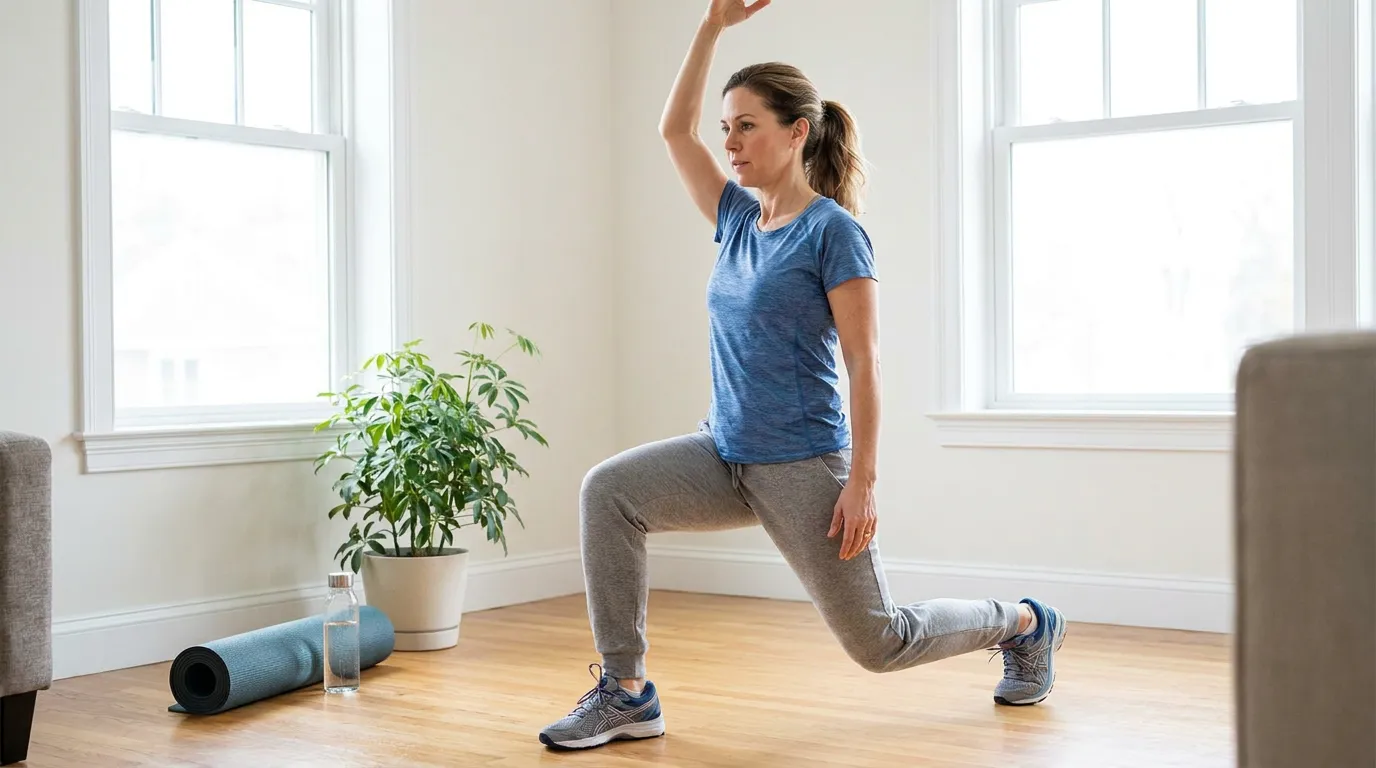
High-Intensity Interval Training (HIIT) is one of the most effective, time-saving conditioning tools available. However, many beginners approach HIIT under a flawed assumption: that “high intensity” means “maximum suffering.”
They perform random, explosive movements without rest until they collapse. This chaotic approach does not build cardiorespiratory fitness; it simply generates severe physical fatigue, spikes cortisol levels, and increases joint injury risks.
To build an explosive anaerobic “gas tank” and stimulate fat loss safely, your interval training must follow a structured, progressive program that respects your joint health and recovery capacity. This guide breaks down the science of progressive intervals and provides a safe, space-saving workout template.
The Science of Metabolic Conditioning
During a high-intensity work interval, your heart rate climbs to 85% to 95% of its maximum capacity. Because your cardiovascular system cannot deliver oxygen fast enough to meet this immediate demand, your muscle cells shift to anaerobic glycolysis—burning stored carbohydrates (glycogen) for rapid energy [2].
The key to HIIT’s efficacy is the recovery interval.
The rest period allows your muscles to partially synthesize ATP, clear accumulated metabolic waste, and reset heart rate variability. This allows you to repeat high-quality, explosive efforts throughout your session, stimulating your cardiovascular system and cellular mitochondria far more effectively than continuous, moderate training [1].
The Manual Progressive Interval Template
The program detailed below is an independent, highly effective manual layout you can follow if you choose to train on your own.
Manual alternative: If you are training independently, execute this 10-minute circuit using standard stopwatches to track your intervals.
Workout Structure: 3-Round Circuit
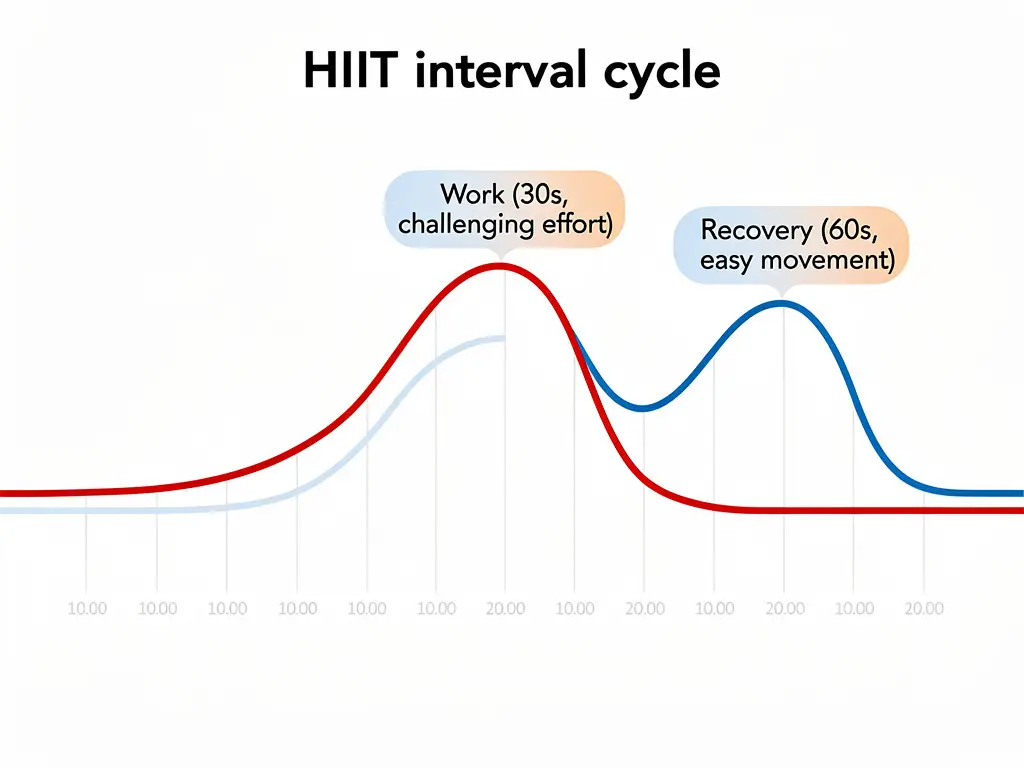
Perform each movement for 30 seconds of controlled, high-effort work, followed by 60 seconds of recovery (slow marching in place). Rest for 60 seconds after completing all 4 movements, then repeat for a total of 3 rounds.
- Station 1 (Cardio): Step-Out Jacks (stepping side-to-side dynamically while swinging your arms).
- Station 2 (Push): Incline Push-Ups (hands placed on a sturdy elevated surface like a couch).
- Station 3 (Lower Body): Alternating Reverse Lunges (focusing on a slow, 3-second descent).
- Station 4 (Core): Standard Plank Hold (keeping your abdominals fully braced).
Automate Your Intervals with FitSekai
If you want to train these patterns without managing complex timing protocols manually, you can leverage the FitSekai app.
Inside our premium library, we have designed Module #4 (HIIT Happens).
This progressive, high-intensity interval training module features 19 scheduled workouts that blend strength, cardio, core, and mobility. Each session is independently structured and includes warm-ups, cooldowns, and AMRAPs to maximize metabolic output, endurance, and recovery across a multi-week cycle.
FitSekai’s Smart Adaptive Training engine automatically processes your post-workout feedback, scaling your interval lengths and rest periods dynamically to ensure you continue to progress safely without hitting a plateau.
Final Thought: Master Your Recovery
HIIT is not about absolute physical exhaustion; it is about smart metabolic strategy. By prioritizing your recovery intervals and moving with precise control, you can protect your joint health and build a stronger, more resilient heart.
📎 Read Next:
References & Further Reading
- Gibala, M. J., & McGee, S. L. (2023). The One-Minute Workout: Science Shows You Can Get Fit in Less Time. Avery. [1].
- American College of Sports Medicine. (2024). ACSM’s Guidelines for Exercise Testing and Prescription (11th ed.). Wolters Kluwer. [2].
- Weston, K. S., et al. (2014). High-intensity interval training in patients with lifestyle-induced cardiometabolic disease. British Journal of Sports Medicine, 48(16), 1227-1234. [6].
ID: 26031
Posting Date: June 18, 2026
Category: Cardio & HIIT
Intent: Informational
Target Word Count: 1,000 words
Word Count: ~1,010 words
Reading Time: ~5 minutes
IMPORTANT LEGAL & CREATIVE DISCLAIMERS
Artificial Intelligence & Generation Disclosure
Please be advised that the written text, formatting structures, hierarchical organization, and creative image generation prompts contained in this guide were researched, structured, and produced with the assistance of advanced artificial intelligence technologies. While the raw narrative generation was AI-aided, all historical references, anatomical mechanisms, and scientific studies have been manually reviewed, cross-referenced, and verified for complete factual accuracy. All visual representations, graphic plans, and layout options are conceptual and have been generated with the assistance of artificial intelligence tools.
Health & Physical Activity Advisory
The information and educational materials provided in this guide are intended solely for general informational and learning purposes and do not constitute professional medical advice, clinical physiological diagnosis, or direct medical treatment. Engaging in any physical exercise program, particularly when utilizing modified home furniture or budget equipment, carries inherent risks of physical injury. It is strongly recommended that you consult with a qualified physician or certified healthcare professional before beginning any new training program, especially if you have pre-existing cardiovascular, metabolic, or musculoskeletal conditions. Stop exercising immediately if you experience pain, dizziness, or chest tightness.